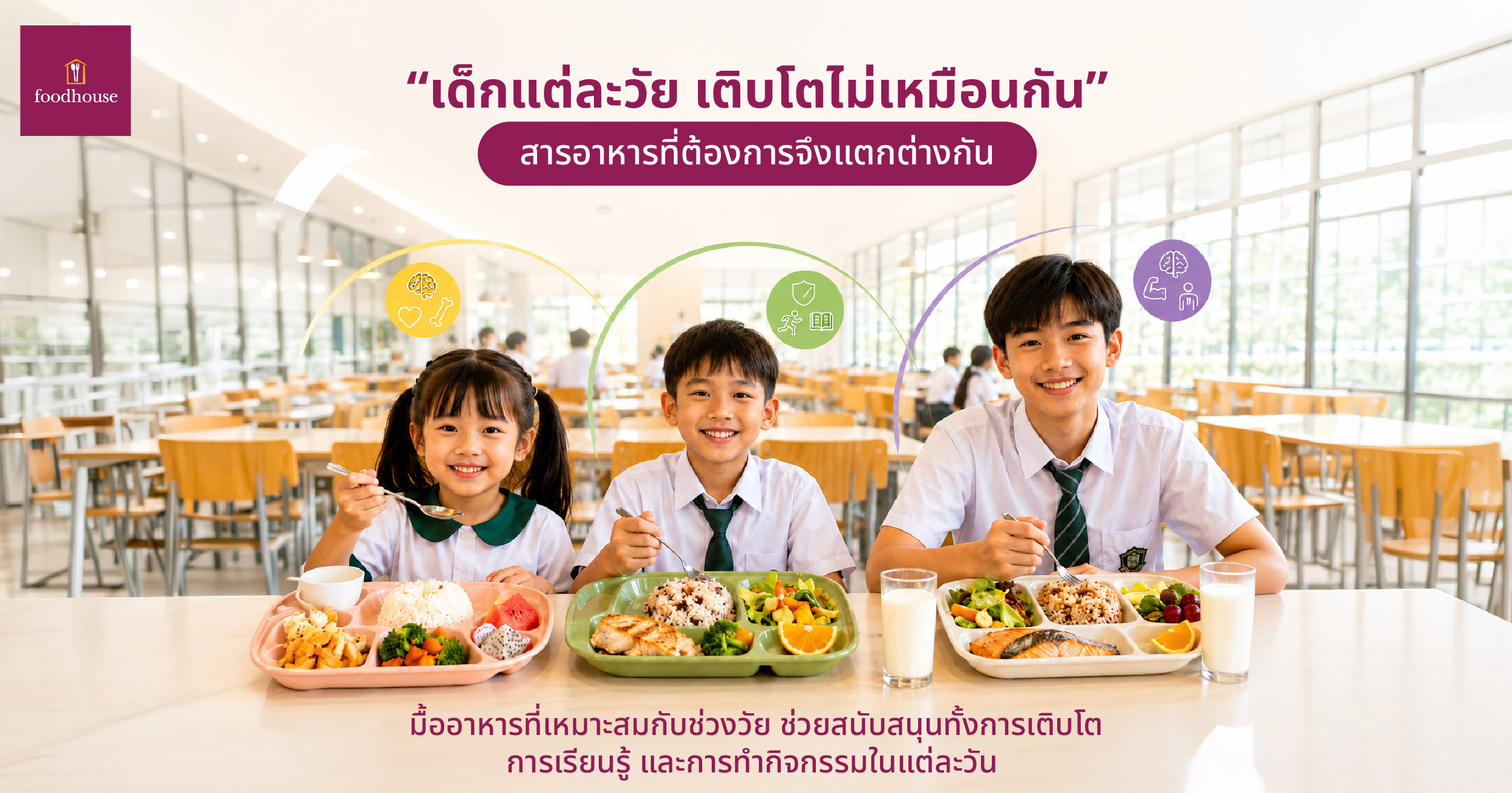
Children at different ages have different growth patterns, developmental needs, and energy requirements. Therefore, food for children should not follow the same menu or portion size for every age group. Meal planning should consider age, daily activity, eating behaviour, nutritional status, and individual dietary requirements.
Appropriate food not only provides sufficient energy but also supports physical growth, learning, daily activities, and the development of healthy eating habits. According to the World Health Organization, a healthy diet should be varied and provide a balanced amount of energy and nutrients while limiting foods high in sugar, salt, and unhealthy fats.
Essential Principles of Food for Children
Regardless of age, children should receive a varied diet that includes all five main food groups:
- Rice, grains, and other carbohydrates provide energy for learning and daily activities.
- Meat, eggs, milk, tofu, and legumes provide protein for growth and tissue repair.
- Colourful vegetables provide fibre, vitamins, and minerals.
- Seasonal fruits provide essential vitamins and add variety to meals.
- Healthy fats should be provided in appropriate amounts, while regularly serving fried foods should be avoided.
In addition to nutritional value, meal planning should consider hygiene, food safety, portion size, food texture, and cooking methods appropriate for each age group. Foods that are excessively sweet, salty, or oily should also be limited.
Food for Children Aged 1–3 Years
Children aged 1–3 are learning how to chew, use a spoon, and eat independently. Their food should therefore be soft, easy to chew, and cut into appropriately sized pieces to reduce the risk of choking.
Nutritious snacks should be provided alongside main meals because children at this age have small stomachs and may not be able to eat large portions at one time.
Suitable meal options include:
- Soft rice with fish and boiled vegetables
- Steamed egg with vegetables
- Mildly seasoned pork or chicken rice porridge
- Soft fruits cut into small pieces
- Plain milk in an appropriate quantity
Large, hard, or chewy foods should be avoided, along with foods that are excessively sweet or salty. Early childhood is an important period for helping children become familiar with the natural flavours of food.
Food for Children Aged 4–6 Years
Preschool children become more active but may also be selective about food or refuse certain vegetables. Menus for this age group should therefore focus on variety, colour, and food that is easy and enjoyable to eat.
Meals should provide sufficient energy, include protein in every meal, and regularly contain vegetables or fruit. Rotating ingredients and meal formats allows children to discover new flavours without becoming bored.
Suitable meal options include:
- Rice with roasted chicken and colourful vegetables
- Lightly seasoned egg fried rice
- Pasta with tomato sauce and meat
- Vegetable soup with bread
- Plain yoghurt or fruit as a snack
New foods should be served alongside familiar options. Children should not be forced to eat in a way that may create negative feelings about mealtimes.
Food for School-Aged Children Aged 7–12 Years
School-aged children require energy for learning, playing, and participating in activities. Their meals should be nutritionally complete and sufficiently filling, particularly breakfast and lunch, which support their readiness throughout the day.
A balanced lunch should include rice or grains, protein, vegetables, fruit, and clean drinking water. Thailand’s Department of Health recommends rotating school lunch menus so children receive a diverse range of ingredients and nutrients.
Guidelines for planning food for school-aged children include:
- Provide quality protein sources such as fish, eggs, chicken, lean meat, or tofu.
- Include colourful vegetables and serve fruit instead of dessert on selected days.
- Rotate Thai and international dishes to create varied dining experiences.
- Limit sugary drinks, sweets, and fried foods.
- Adjust portions according to the child’s age and activity level.
Meals should be both nutritious and appealing. Healthy food can only deliver its intended benefits when children accept and consume it in suitable quantities.
Food for Teenagers Aged 13–18 Years
Adolescence is a period of rapid physical growth and changes in bone mass, muscle development, and hormones. Teenagers therefore require energy, protein, calcium, iron, and other nutrients according to their sex, physical development, and activity level.
Meals for teenagers should prioritise:
- Quality protein at every meal
- Plain milk or other suitable sources of calcium
- Iron-rich foods such as meat, eggs, and selected vegetables
- Rice and grains in portions appropriate for their activity level
- A variety of vegetables and fruits
- Water instead of sugary drinks
Teenagers should avoid severely restricting food or removing entire food groups, particularly when trying to manage their weight, as this may result in insufficient energy and nutrients for healthy growth.
Food for Children with Specific Dietary Requirements
In addition to age, meal planning should consider individual needs, including:
- Food allergies
- Religious or cultural dietary requirements
- Underweight or overweight conditions
- Medical conditions or dietary instructions from a doctor
- Vegetarian diets
- Difficulties with chewing, swallowing, or accepting certain food textures
Schools should maintain a clear system for recording and communicating this information among parents, teachers, dietitians, and kitchen teams to ensure that every child receives the correct food safely.
Planning Food for Children Goes Beyond Creating a Menu
Effective school meal management is a continuous process. It includes menu planning, ingredient selection, portion control, food production supervision, and monitoring how much food children actually consume.
Information about plate waste and eating behaviour can be used to evaluate and improve future menus. For example, if children regularly leave a particular vegetable uneaten, the cooking method, portion size, or food pairing may need to be adjusted while maintaining the original nutritional objectives.
Foodhouse Understands the Nutritional Needs of Children at Every Age
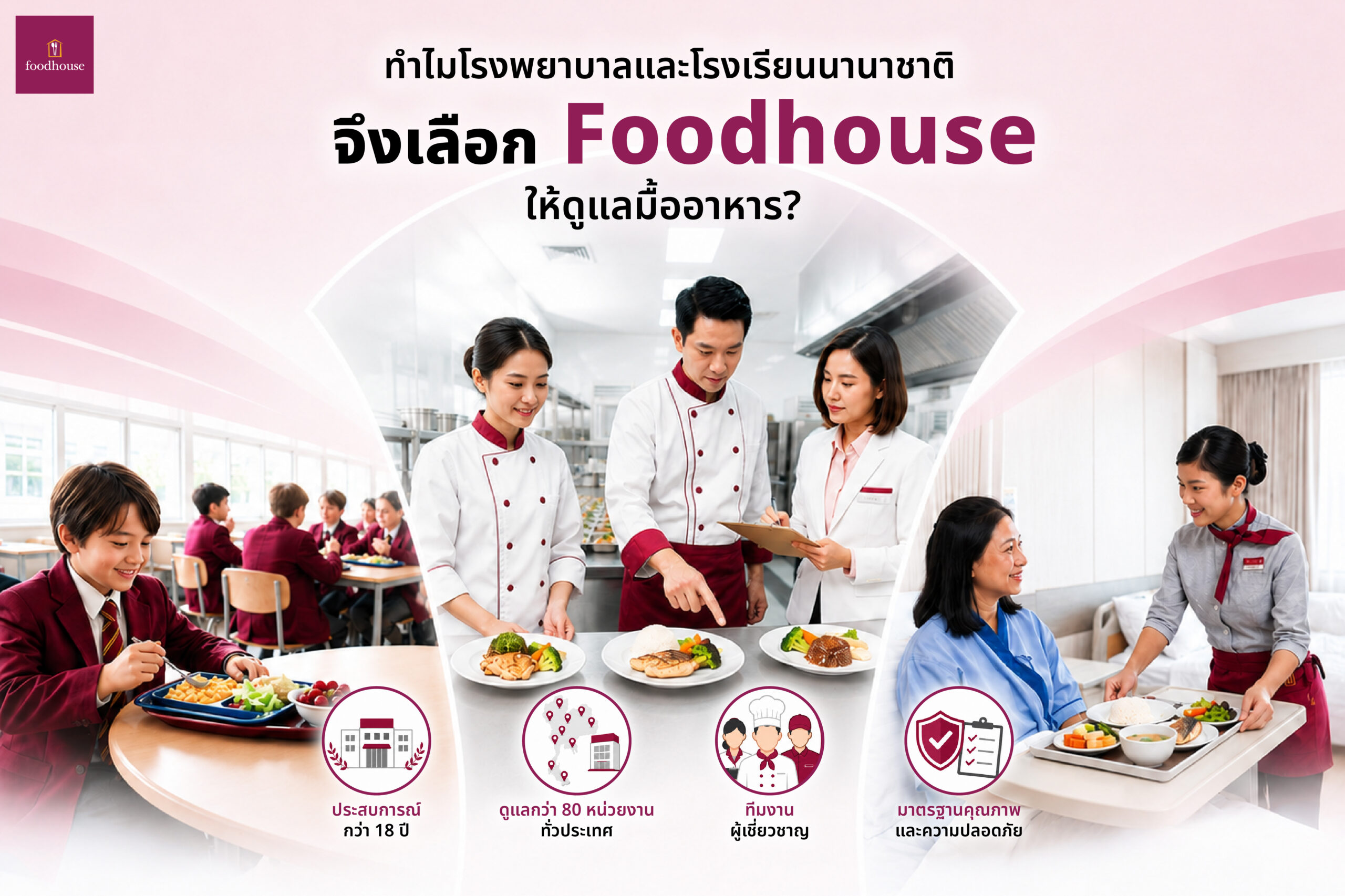
Foodhouse provides professional food service management for schools and international schools. Our dietitians help plan menus, supervise meal provision, and evaluate children’s daily food consumption. This allows us to continuously improve meals in terms of nutrition, portion size, safety, and student acceptance.
With more than 18 years of Food Service Management experience and operations across over 90 sites, Foodhouse provides comprehensive support covering menu planning, staffing, ingredient preparation, quality control, and food safety. Our goal is to ensure that every meal supports children’s growth, learning, and daily activities.
If your school is looking for an experienced food service management provider, contact Foodhouse Thailand to learn more about our services or arrange a site assessment.
Frequently Asked Questions About Food for Children
What should food for children include?
Children’s meals should contain a variety of grains, protein, vegetables, fruit, and healthy fats in suitable proportions. Portions and food textures should be adjusted according to the child’s age, growth, and activity level.
Can children of different ages eat the same food?
The same core ingredients may be used, but portion sizes, textures, piece sizes, seasoning, and nutritional proportions should be adjusted to suit each child’s age and developmental needs.
How often should children’s menus be changed?
Menus should be planned in cycles and rotated regularly to provide variety, reduce repetition, and help children receive nutrients from a broad range of ingredients.
How should schools evaluate children’s eating habits?
Schools should monitor food consumption and plate waste, identify which menus children accept, and assess nutritional status according to appropriate guidelines. The information can then be used to improve future menus and portion sizes.